
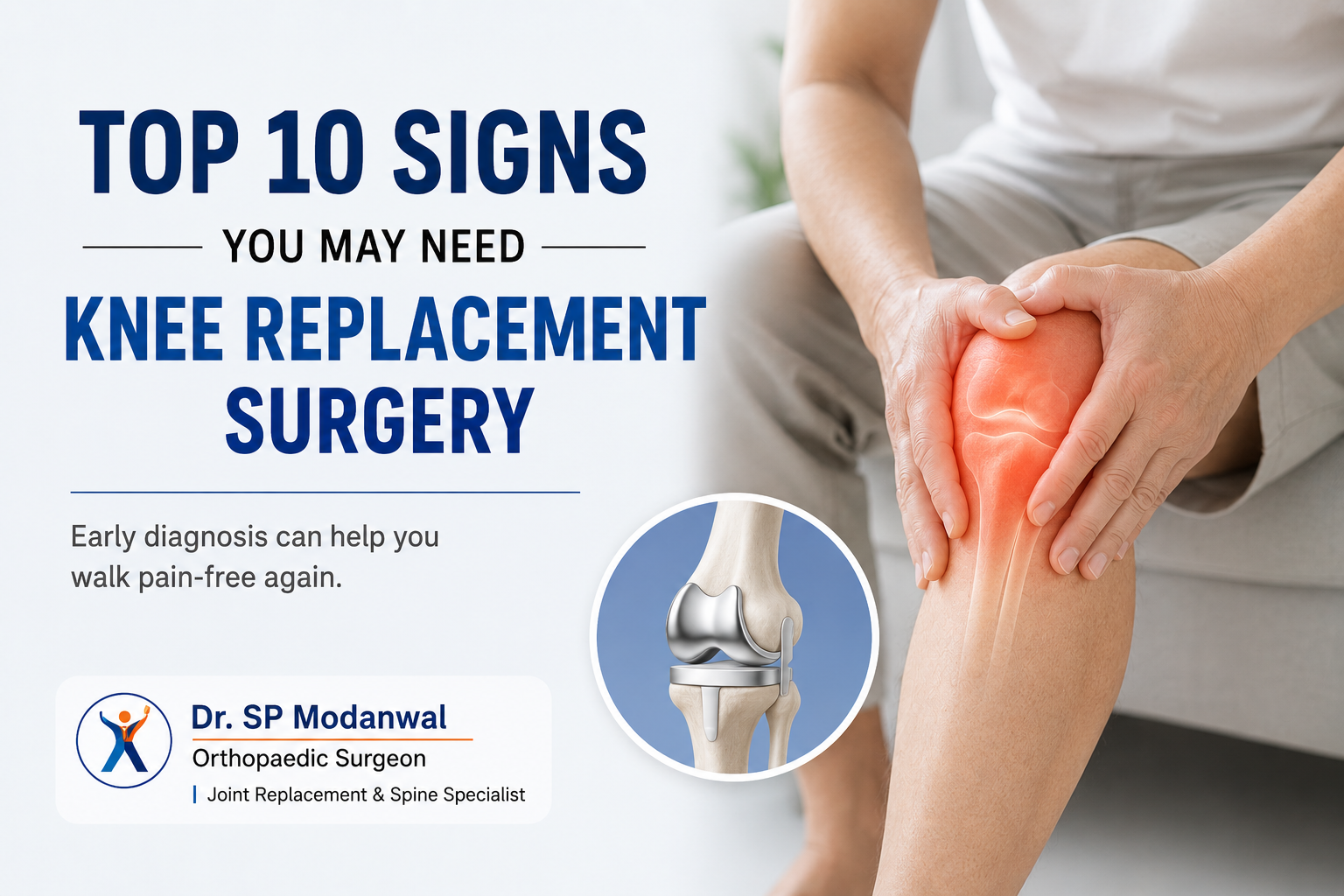
Living with bad knees makes your whole world feel incredibly small. It usually starts out as a minor annoyance—a little stiffness when you get up from the sofa, or a dull ache after an evening walk. But over time, severe osteoarthritis quietly eats away at the smooth cartilage inside your joint. Before you know it, your entire day is scheduled around your pain, and you start turning down invitations to go out simply because you can’t face the walk from the parking lot.
When a knee becomes a constant source of misery, it is easy to feel defeated and old before your time. A lot of people put off seeing a specialist because they are plain terrified of the word “surgery.” But joint reconstruction has changed completely over the last few years. Recognizing the right time to talk to a proper knee replacement surgeon in varanasi can save you from years of pointless suffering and give you back your basic independence.
Here are 10 blunt signs that your knee joint is structurally failing and might need a reset.
1. Simple, everyday stuff has become a battle
If getting off a low chair, tying your shoes, or just stepping into the shower makes you grit your teeth, the joint is giving out. When basic daily life starts feeling like a physical chore, you are dealing with a real mechanical issue.
2. The pain doesn’t stop when you lie down
There is nothing worse than being exhausted but unable to sleep because your leg won’t stop throbbing. If your knee aches or burns when you are lying completely still in bed, the inflammation has become chronic. Sleep loss is usually the final straw for most patients.
3. You are popping painkillers like candy, and they aren’t working
Early on, a basic over-the-counter pill or a pain gel does the trick. But if you are taking maximum daily doses of strong medications and the sharp pain still cuts right through them, the cartilage is likely gone, leaving you with bone-on-bone friction.
4. Your legs are visibly changing shape
Take a good look in the mirror. If your legs are starting to bow outward or knock inward, creating a weird alignment that wasn’t there years ago, the joint structure is actively collapsing because one side of the bone has worn down faster than the other.
5. There is a distinct grinding sensation inside the joint
When the protective cushion is completely gone, bones rub directly against bones. If you can feel—or even hear—a rough crunching, clicking, or grating feeling when you bend your leg, that is advanced structural damage that physiotherapy cannot magically fix.
6. Even light exercises leave the joint angry and swollen
Physical activity is usually good for you, but only up to a point. If a short walk or light stretching leaves your knee puffy, hot to the touch, and intensely painful for the next two days, the joint can no longer handle the weight of normal movement.
7. Injections don’t provide relief anymore
Many people try to delay surgery by getting steroid or gel injections directly into the knee. That is a fine short-term fix early on. But if your last injection wore off in just a couple of weeks, it means the joint is too far gone for temporary lubrication.
8. Your knee randomly locks up or buckles out of nowhere
When loose bits of worn-out cartilage or sharp bone spurs get jammed inside the joint mechanism, the knee can suddenly freeze. Even scarier, it might just randomly give out while you are walking, which easily leads to dangerous falls and fractures.
9. Persistent stiffness that limits how far you can bend your leg
If your knee stays constantly stiff and you physically cannot straighten it all the way out or bend it enough to sit comfortably, the internal tissues are under massive scar stress. This lack of movement eventually causes your thigh muscles to waste away from disuse.
10. You have started giving up on the things you love
This is the most important indicator on the list, and it doesn’t require an X-ray to see. If you have stopped traveling, going to family functions, or playing with your grandkids because you are terrified of the walking involved, the knee pain is officially running your life.
Why People Choose Dr. S.P. Modanwal for Joint Replacement
Letting someone operate on your joints is a massive decision because it decides how well you’ll walk for the next twenty years. You need a specialist who spends their life analyzing bone physics and structural alignment. Dr. S.P. Modanwal brings a heavy background of high-intensity orthopedic experience to Varanasi, having spent years managing complex bone trauma, joint reconstructions, and failed surgeries at massive regional centers like KGMU Lucknow and the busy BHU Trauma Center.
Practicing near Amra Chauraha and at Highway Hospital, Dr. Modanwal utilizes advanced, muscle-preserving techniques for knee replacements. His main focus is on restoring your exact natural leg alignment so your new joint feels stable, fluid, and comfortable. Patients respect him because he doesn’t push surgery on anyone—if your knee can still be managed safely without an operation, he will tell you so directly and map out a non-surgical plan. By offering this caliber of joint replacement right here in Varanasi, he allows local patients to get top-tier treatment and recover comfortably at home, saving families from the massive expense and headache of traveling to distant metro cities.